Ohio fair officials teach ag to urbanites
using virtual reality
By DOUG GRAVES
Ohio Correspondent
COLUMBUS, Ohio — Over the past few years the Ohio State Fair, as
well as many of the 88 county fairs in the state, have done their best to
inform the urban public where their food comes from.
Now, there’s a new effort going on at fairs to give patrons a
better idea of what farmers do, short of working the field itself. Ohio Farm
Bureau Federation (OFBF) led this effort at the Ohio State Fair last week, with
its interactive “Land and Living” exhibit in the Nationwide Donahey Agriculture
and Horticulture Building.
“The exhibit demonstrates agriculture’s link to everyday life,
and we put urban patrons to the test,” said OFBF intern Abby Pozderac. “With so
many exciting activities, the Land and Living exhibits are informational and
interactive for all ages. We’re hoping visitors leave with a better
understanding of the many facets of agriculture.”
In typical state fair fashion, there were a variety of
interactive opportunities for children, such as playing with local rescue dogs,
and learning about nutrition in the re-imagined child-sized grocery. This
offered the chance to pick one’s own fruits and vegetables from the shelves,
with the purpose of showing children how to select a complete and quality meal.
Another display allowed visitors to see chicks and turkeys come
out of their shells. And, there were the ever-popular Country Cruise pedal
tractors.
These displays are what fair officials call “standard,” or
ordinary. In an effort to target the adult audience, though – those who have no
idea of the many issues facing farmers these days – the state fair had virtual
farming and agriscience experiences.
First up was the Augmented Reality Sandbox, a water quality
sandbox. It is a 4-foot-square sandbox with an overhead projector, which
displays elevation lines in accordance with the height of the sand. This
display simulates the topographical setting of farmland.
When a hand hovers between the projector and the sand, simulated
rain forms, eventually showing the effects of runoff and water damage.
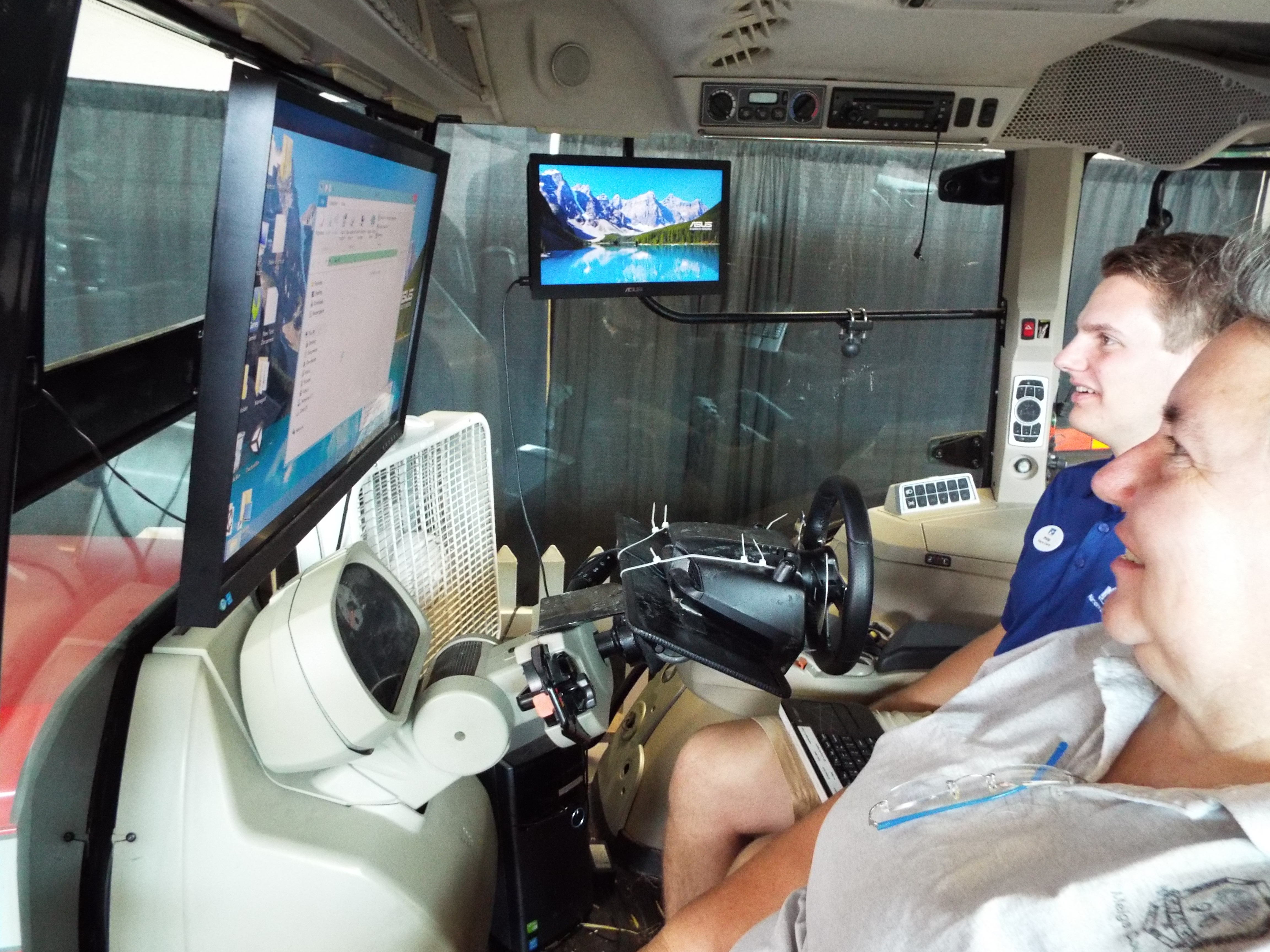
Most popular is the tractor simulator, giving non-farmers an idea
of the complexity involved in operating a three-ton tractor and planter in a
field of varying terrain, while keeping their eyes on computer gadgets of all
kinds in the cab.
Visitors attempting this simulator have five minutes to make as
many passes through the field as they can and in the end, a computer provides a
score based on the speed and accuracy of each row tilled, the amount of seed
planted and the fuel used during the time allotted.
“I drive a truck for a living, but I had no idea working a field
could be this tough,” said Rodney Baver, a UPS driver who lives in Xenia.
“There are so many things to keep an eye on and perhaps the most difficult part,
of keeping the tractor going straight on an uneven surface. Very interesting
simulator.”
He attempted the simulator a second time, but his results were
much the same.
“There are farm game simulators such as Farmville, but that’s not
realistic,” Baver said. “Experiencing this simulator makes you appreciate all
that the farmer has to go through to get his seed in the ground. It’s
definitely not easy.”
Many ag interns from local colleges and universities helped guide
visitors through these virtual displays.
“Eventually, what these new displays do is demonstrate
agriculture’s link to everyday life,” said Don
Spencer, an OFBF member from Mount Vernon. “The public has been bombarded
with the message that food comes from farms, or that many fibers in everyday
life come from the farm.
“This is all well and good. But the effort now is to try and
bring the urban public a little bit closer to understanding the efforts by the
American farmer.” Even the neighboring Indiana State Fair offered a virtual
reality tour through a swine barn.
“The emphasis this year was allowing a more in-depth vision of
Ohio’s crops, animals and other important areas of agriculture,” Spencer
explained.
“We estimate we had 300,000 visitors to the virtual displays in
this building,” said Pozderac. “We hope visitors leave with a better
understanding of the many facets of agriculture in Ohio.”
|