Illinois issues first fracking
permit after stringent law
By STEVE BINDER
Illinois Correspondent
SPRINGFIELD, Ill. — Officials with the Illinois Department of
Natural Resources (DNR), after nearly a year’s review, have approved the first
permit for a hydraulic fracturing project since lawmakers OK’d a 2014 law that
some environmentalists said was the toughest in the nation.
The permit, issued to Wichita, Kan.-based Woolsey Operating Co.,
allows for a fracturing operation on farmland just north of southern Illinois
town of Enfield in White County.
Woolsey Vice President Mark Sooter said the company plans to
complete an exploration test well by the end of the year and determine whether
the company would then seek permits for additional wells. Every well requires a
separate permit under Illinois’ Hydraulic Fracturing Regulatory Act.
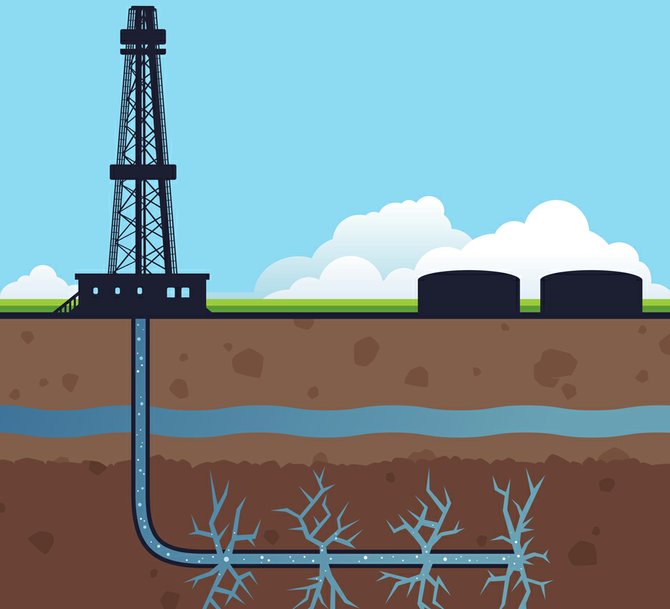
Hydraulic fracturing, also known as fracking, involves the
injection of water and certain chemicals deep into shale so that oil and
natural gas can be extracted. The process isn’t new, but it has been more
prevalent since 2010 and is widely credited with boosting the United States’ production
of oil and natural gas.
Environmentalists long have opposed the process, saying it can
pollute water tables and ripen conditions for earthquakes.
Since 2012, though, the amount of fracking nationally has waned
in large part because oil and natural gas prices nosedived. Since the Illinois
law was passed nearly four years ago, Woolsey has been the only company to
formally apply for a fracturing permit, according to the DNR.
And in July, the state received more than 10,000 comments about
the Woolsey application, with most coming from opponents such as the Food &
Water Watch, the Illinois Green Party, Southern Illinoisans against Fracturing
our Environment (SAFE) and the Environmental Defense Fund.
“White County is not only particularly vulnerable to the impacts
of fracking due to high levels of naturally occurring radioactivity and seismic
activity, but also already faces periodic oil and brine spills,” officials with
Food & Water Watch, a group advocating for healthy food and clean water,
said in a written statement.
Woolsey’s permit covers everything involving the construction of
the well, its operation and its regular monitoring and reporting requirements,
according to a statement from the DNR.
But Rich Whitney, vice chair of the Illinois Green Party and
SAFE, said he’s doubtful the DNR will be able to uphold its oversight role,
particularly after the state went more than two years without an approved budget,
slashed thousands of jobs and built a bill backlog that hit nearly $15 billion.
“After all these years of living with budget cuts, there is not
the will nor the manpower to properly regulate and address the fracking process
and disposal sites,” he said.
As he emphasized the detailed and lengthy application process put
in place in Illinois, Sooter said the company is confident it will protect the
environment as it has done throughout its history.
“We feel comfortable that
we will be able to protect the environment,” he stated.
|