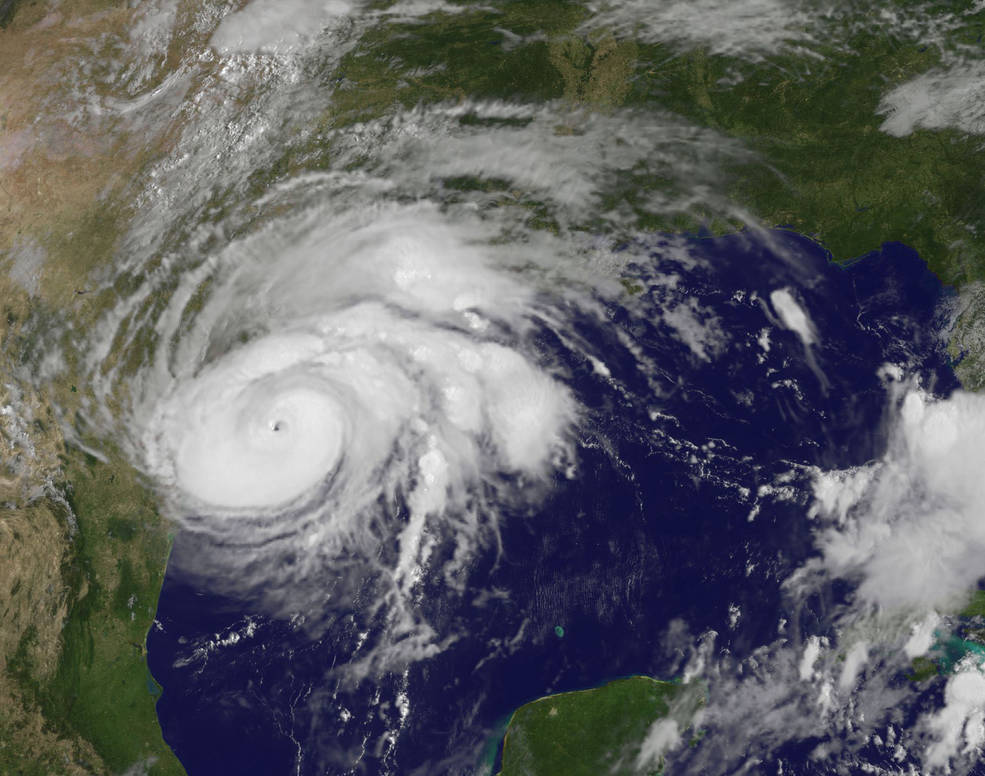
Hurricane Harvey takes a toll on
Texas’ cotton crop
By JORDAN STRICKLER
Kentucky Correspondent
CORPUS CHRISTI, Texas — Farmers who were expecting to see the
best cotton crop in more than a decade are devastated after Hurricane Harvey swept
through the southern United States last week.
Total losses for the nation’s cotton crop will be an estimated
400,000-500,000 bales, with another 300,000-400,000 whose quality might be
impaired. The total impact to the nation’s supply will not be huge, as the USDA
projected this year’s crop to come in at 20.5 million bales – the highest in 11
years – but the impact to the individual farmer could be overwhelming.
“This might really pose some problems to the individual
producer,” said Dr. Gaylon Morgan, state extension cotton specialist at Texas
A&M. “Some of the producers are making the decision as to whether or not to
get back in the field and see what they can salvage.”
In Texas, the nation’s largest cotton state, 13 of the 50
counties declared disaster areas by Gov. Greg Abbott are cotton producing.
While the cotton-growing area most affected by hurricane devastation were in
the upper Texas coast, farmers all the way to Tennessee are could feel the
impact.
In other growing states such as Missouri, Mississippi, Tennessee,
Arkansas and Louisiana, 20-40 percent of the crop “bolls” – pods that contain
the cotton fibers – have started to open. Excessive rainfall from the remnants
of Harvey put these crops in danger of a downgraded quality.
This year’s cotton crop was on par for record highs after a poor
2016 crop forced some farmers to refinance loans to keep operations afloat. The
20.5-million bale estimate by the USDA would have been a 3.4 million bale
advantage over last year, representing more than a 20 percent increase.
Overseas sales for the 2016-17 crop were projected at 14.9
million bales, up 62 percent from the previous year and the second highest
volume since 2005. According to USDA August numbers prior to Harvey, Texas was
expecting a giant cotton crop of 8.8 million bales (6.6 million planted acres).
As the storm approached, many growers were prompted to
prematurely pick cotton to minimize damage, but those sitting in modules did
not evade the storm’s wrath. While gusts of up to 145-mph scattered cotton
across the countryside, the damage to those storage modules could be equally
pricey as to that cotton lost in the fields. With modules potentially valued in
the thousands of dollars, modules which had the tarps torn off and those which
are sitting in standing water of up to four feet, will have heavy setbacks to
the quality.
Though insurance will cover some of the losses, Morgan said it
will not be enough to cover losses. “Some portion of the farmers had hurricane
insurance, but that has a ceiling like all insurance, so hopefully those who
have harvested will be protected by that insurance,” he said. “Crop insurance
is based on pound, and these guys are obviously going to lose quality. The
farmers who still had crops in the field are going to be even worse off.”
Grower policies are priced early in the year and are based on
historic yields. Most policies are only insured at 60-70 percent and with the
expected banner year, the crop which would have been harvested and sold would
have brought a higher price than what insurance will pay.
Morgan says that some producers are weighing the benefits of
trying to save their crop. “One big factor is how much cotton was in modules
and can be ginned. This all depends on the level of saturation. If it’s able to
be ginned, then what is that going to do to the quality? We know it’s going to
drop the quality, the question is by how much.”
Cotton growers in Texas aren’t the only ones to be concerned. As
of this writing, farmers in the southeastern U.S. brace for Hurricane Irma,
which shattered the global record for a cyclone to maintain 185-mph winds for
such a long duration at 33 hours. Super Typhoon Haiyan previously set the
record in 2013 when it maintained winds at that level for 24 hours.
However, growers in that region have less to be concerned about
as those in the Lone Star State, despite boles being measured at 50 percent
open in the last crop progress report. “I think the fact that the storm is
going to go quickly will lessen the problems growers will experience,” said
Dale Molher, a commodity specialist and senior meteorologist with AccuWeather.
“We’ll experience a lot of heavy rainfall, probably up to six
inches of rain, but then the weather is going to be fairly favorable. I don’t
think the wind is going to be all that damaging, but the cotton is relatively
low to the ground. It is mainly going to be the rain that is going to cause
problems.”
While the Texas producers suffered withering losses from what
would have been a banner year, Molher believes that any damage would not be an
extreme setback to the southeastern regions. “It was looking as an above
average year for that part of the country. Irma will probably knock it back a
little bit to average. I don’t think it’s a devastating situation for their
cotton.”
|