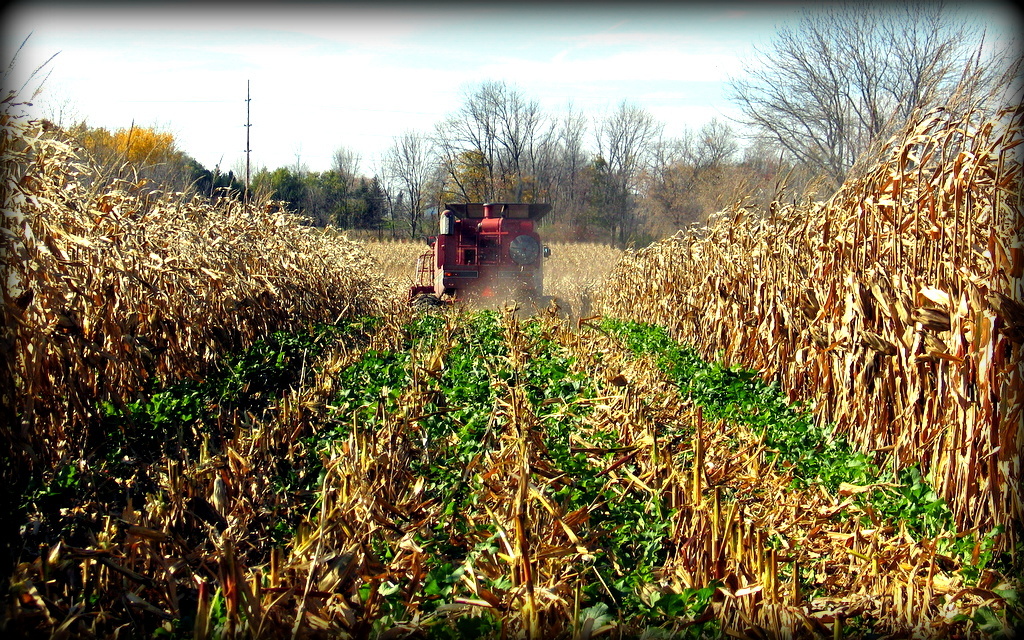
National survey saying cover crops no longer niche market
By SUSAN BLOWER
Indiana Correspondent
WEST LAFAYETTE, Ind. — A national survey of 2,012 farmers shows
that acreage planted in cover crops has nearly doubled in the past five years.
In addition, 88 percent of those surveyed use cover crops and
reported increased yields of corn, soybeans and wheat, as well as improved
control of herbicide-resistant weeds.
“What the survey tells us is that, if you look at demographic
information – farm size, tillage type, location, experience with cover crops –
you can see that cover crops are no longer a niche market in agriculture,” said
Chad Watts, executive director of Conservation Technology Information Center
(CTIC) in West Lafayette, and survey organizer.
Since 2012, when the annual survey began, cover crop acreage has
steadily increased to an average of 400 acres per farm in 2016, up from 217 in
2012. For 2017 planting, farmers expected to increase cover crop planting to an
average of 451 acres.
“I think the information from farmers shows us that there are
many farmers, from large to small, row-crop to vegetable/truck farmers, tillers
to those who choose not to till, who are interested in using cover crops. There
are also farmers who have heard about cover crops and do not know where to
start in terms of making them a part of their farming system,” Watts said.
Released last week, the poll was conducted by CTIC with help from
Purdue University and funding from Sustainable Agriculture and Research
Education (SARE) and the American Seed Trade Assoc.
Survey participants reported that after cover crops, corn yields
increased an average of 2.3 bushels per acre, or 1.3 percent; soybean yields
increased 2.1 bushels, or 3.8 percent; wheat yields increased 1.9 bushels, or
2.8 percent.
Farmers typically plant cover crops in the off-season after
harvest to provide ground cover, nutrient sequestration and weed suppression
and improve soil health. However, the report shows an emerging trend to
inter-seed covers into growing cash crops – with 27 percent of respondents
reporting seeding cover crops at sidedress fertilization time or in late
summer.
At the other end of the cycle, a growing number have tried
“planting green” and said it helped suppress weeds, manage soil moisture and maximize
other benefits.
“I was surprised to see that 39 percent of farmers have tried
‘planting green,’ meaning that they plant their commodity crop such as corn or
soybeans into a cover crop that is still alive, and then terminate it after
planting,” said Rob Myers, regional director of extension programs for North
Central SARE at the University of Missouri.
“I would venture that five years ago, only a few percent of
farmers would say they had tried that because the conventional thinking had
been to terminate cover crop ahead of planting, often multiple weeks ahead of
corn or soybean planting. This indicates farmers are wanting to maximize their
cover crop benefits by letting the cover crop grow longer and are continuing to
evolve in how they manage cover crops.”
A majority of farmers – 59 percent – are now dealing with
herbicide-resistant weeds on their farm, according to the report.
“This highlights the importance of cover crops as one of the
tools in fighting herbicide-resistant weeds, with over two-thirds (69 percent)
saying they always or sometimes got better control of herbicide-resistant weeds
after growing cereal rye,” Myers said.
Also, 85 percent said cover crops have contributed to soil
health. Although the survey did not directly address a cost analysis of cover
crops versus benefit, Myers said after 2-3 years he believes cover crops pay
for themselves in many ways. Cost-share funding can offset the first year of
using cover crops.
“There are harder to quantify short-term economic benefits from
cover crops, such as better nutrient management, better weed control and
reduced soil compaction, with long-term benefits such as improved organic
matter and better overall soil health,” he explained.
One of the most important outcomes of the SARE/CTIC cover crop
survey is insight into what motivates farmers to use cover, Watts said. “Among
cover crop users, we are seeing great enthusiasm for the soil health benefits
of cover crops, with a widespread appreciation for the long-term benefits of
covers. Among non-users, we’re getting a strong signal they want more
information and training.”
Watts said training can include educational resources on seed
selection, planting method and termination advice, as well as matching novice
farmers with on-farm consultants, advisors or other farmers who are already
using cover effectively.
Find previous surveys online at www.sare.org/covercropsurvey
|