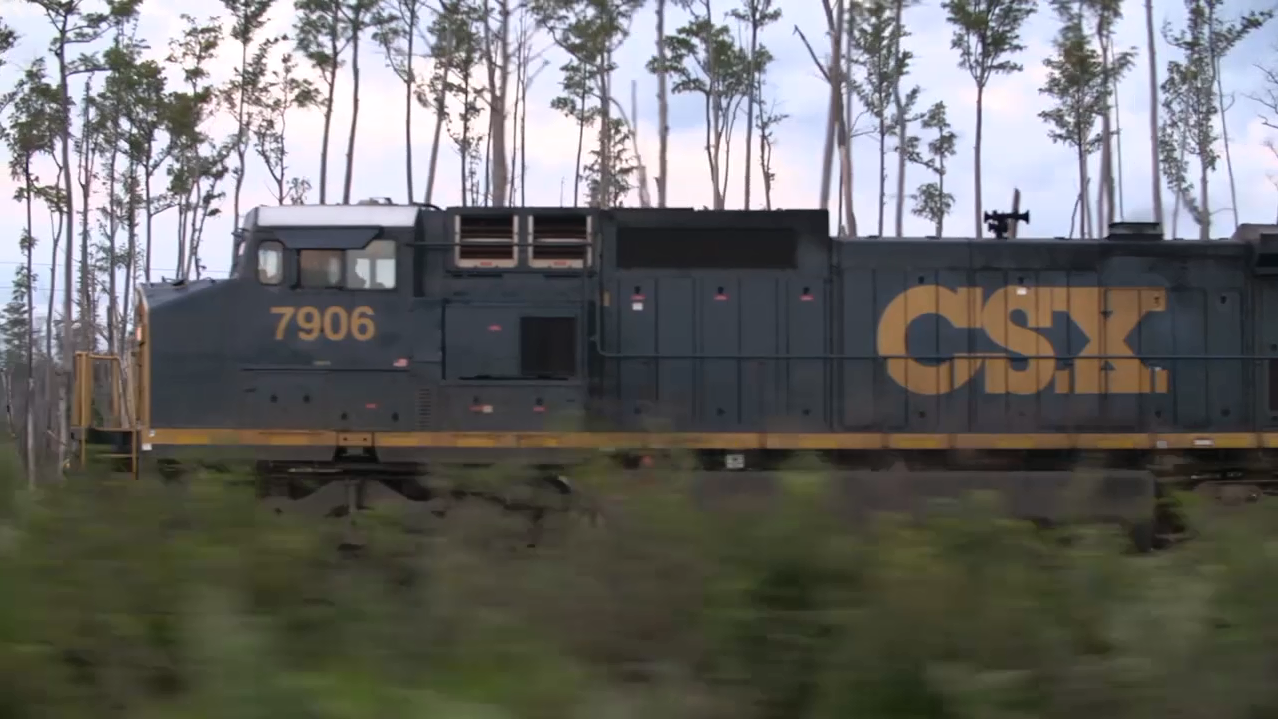
Farm Groups blast CSX over
service disruptions, CSX chief apologizes
By JIM RUTLEDGE
D.C. Correspondent
WASHINGTON, D.C. — The nation’s major rail shippers including
farm groups and food producers blasted CSX Corp’s lengthy service disruptions
over the past several months calling on federal regulators to demand the No. 3
U.S. railroad improve its operations immediately.
Farm trade groups,
along with Cargill Inc., and Dow Chemical have complain to the U.S. Surface
Transportation Board (STB) of longer transit times, inefficient rail car
routings that caused missed delivery days by weeks, unreliable switching
operations and poor communications with CSX customer service operators.
In a specially
scheduled meeting of the U.S. Surface Transportation Board on October 11, CSX’s
CEO Hunter Harrison apologized to shippers and defended what he calls his
“precision schedule railroad” plan that has apparently been the root of CSX’s
service disruptions.
“If I don’t
accomplish anything else today, I want to apologize to our valued shippers,”
Harrison told the STB here in Washington.
The STB announced in
August it would conduct a public hearing labeling it a “public listening
session” after being flooded with complaints from hundreds of CSX customers for
the past four months. Harrison took over
CSX in March and was handed a hundred million dollar plus compensation package.
The hearing last week
was the first public forum for customers to air their grievances and gave
Harrison the chance to defend his strategy.
Since mid-July, the
STB has been closely monitoring CSX’s performance after widespread problems
resulted when Harrison implementing dramatic changes to the railroad’s
operating plan.
Shortly after taking
over CSX Harrison announced a sweeping reorganization laying off more than
2,300 workers including a thousand managers, mothballing locomotives and closing
CSX rail yards. He also flipped-flopped the way rail cars are sorted in rail
yards replacing “unit” trains that normally carry a single commodity like grain
with trains to carry diverse freight. As
a result of the service issues, CSX was forced to reopen one of its switching
hubs last month.
Harrison told the
board, “Whatever problems we’ve had, we’ve had internally, we made some
mistakes, this is not a failure of (his) precision scheduled railroad (plan).”
CSX maintains more
than 21,000 miles of rail routes connecting the Midwest to the Northeast and
Mid-Atlantic.
Some of the most
critical complaints were made by Randy Gordon, president of the National Grain
and Feed Association (NGFA), who cited major shipping delays that resulted in
losses of hundreds of thousands of dollars to shippers from misrouted rail cars
that prevented critical grain shipments from reaching its markets on time.
The NGFA represents
more than 1,000 major grain, feed and processing clients who ship more than 70
percent of the county’s grains and oilseeds.
“In some cases, our
members have said they simply have given up,” Gordon said, “alleging that
answers provided by CSX personnel (to its members) – if and when they can
access them – are opaque and vague.”
Gordon, who was one of
20 CSX customers to appear before the STB, outlined a long list of issues and
concluded with a detailed list of recommendations he urged the STB to adopt to
improve rail service.
“We respectfully
submit that the seriousness of CSX’s actions nevertheless call for more robust
oversight by the Board until its alleviated,” Gordon said.
Clay Detlefsen, Senior
Vice President of Regulatory Affairs at the National Milk Producers Federation
(NMPF), told the STB, “Unfortunately, due to missing and delayed rail shipment,
the feed industry has had to turn to over-the-road transportation far too
often. That results in increased costs of up to $40 per ton compared to
contracted arrangements with freight rail.”
John Bode, head of the
Corn Refiners Association (CRA), said the “abusive treatment of captive
shippers by CSX, has had a substantial adverse effect on the economic interests
of the U.S.”
“CSX service
disruptions have negatively impacted the efficiency and environmental footprint
of all CRA members’ operations in the CSX service area. Bulk shipment to
customers who are captive to CSX service are taking longer and are less
consistent when compared to a year ago,” Bode told regulators.
Several shippers asked
the Board to force CSX to publish minutes from its weekly calls with CSX
management, and to file a “flight plan” outline in advance of future system
changes. They also asked CSX to scale back it rail changes that have resulted
in CSX shutting down critical rail hubs.
Dow’s Greg Jozwiak,
its supply chain boss, urged the STB to improve its rule to expedite relief
when disruptions hit shippers.
“The reality is the
procedures take too long,” he said. “We need a service remedy counted in days,
not weeks or months.”
Prior to the hearing,
CSX urged several of its customers who rail service has improved to write
letters of support to the STB.
Wayne Farms, of
Oakwood, Ga., who operates the largest start-up feed mill in the U.S. poultry
industry wrote, “Communication has been consistent and proactive from the local
level to senior management. CSX represents a united front to provide us the
reliable service that we expect and Wayne Farms is very satisfied and grateful
for our partnership (with CSX).” The letter was sent October 3 from Glenn
Smith, Wayne’s Director of Feed Ingredient Procurement.
The STB did not say
when it would issue a decision as a result of the hearing.
To view a webcast of
the October 11 “Listening Session.” visit the STB’s website,
https://www.stb.gov/stb/audiomee.nsf and click on the top most link.
|